How to Fix Your Feline Focus Routine If Your Kitten Is Distracted
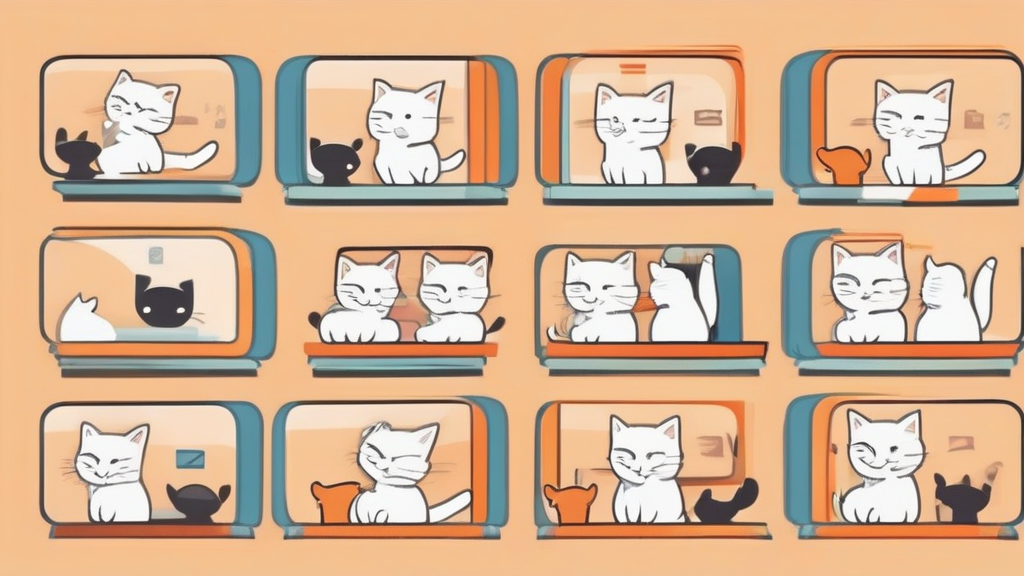
Mastering Attention with The Feline Focus Method: How to Train Your Kitten Using Visual Anchors
If you have ever tried to teach a young cat a simple command only to watch them bolt toward a dust bunny, you understand the struggle. The Feline Focus Method: How to Train Your Kitten Using Visual Anchors is exactly what you need to ground their wandering attention. Training a kitten requires patience, but more importantly, it requires a strategy that aligns with their natural predatory instincts.
Key Takeaways
- Visual anchors provide a fixed point of reference that helps kittens regulate their erratic energy levels.
- Consistency in your environment prevents sensory overload, which is often the root cause of distraction.
- Positive reinforcement must be immediate to link the visual anchor with the desired behavior.
Why Kittens Get So Easily Distracted
Kittens are essentially tiny, high-speed biological machines designed to hunt. Their brains are wired for predation, meaning every movement, shadow, or sound triggers an immediate response. When you try to train them, you are competing with their innate biological drive to investigate anything that moves.
Think of your kitten like a toddler who has just consumed a gallon of espresso. They aren't trying to be difficult; their sensory input is simply overwhelming. If you don't provide a clear, non-moving target for them to focus on, they will inevitably create their own distractions.
The Role of Sensory Overload
Most pet owners make the mistake of training in a room filled with toys, open windows, or background noise. A kitten’s cat senses are significantly sharper than ours. To them, a distant hum of a refrigerator is a potential threat or a curiosity that demands investigation.
To fix your routine, you must strip away the noise. Create a "neutral zone" where the only thing of interest is you and the training tool. By reducing the ambient sensory load, you make it significantly easier for the kitten to lock onto the anchor you provide.
Implementing The Feline Focus Method: How to Train Your Kitten Using Visual Anchors
The core of this method relies on the use of a "Visual Anchor." This is a stationary object—usually a specific colored target stick or a distinct mat—that signifies "work time." By associating this object with high-value rewards, you teach the kitten that focus equals treats.
Step 1: Establishing the Anchor
Choose a target stick with a distinct color, like bright orange or blue. You want this to be the only time the kitten sees this specific object. If you leave it on the floor as a toy, it loses its power as a training tool.
Present the anchor silently. Do not talk or make sudden movements. Let the kitten investigate it. The moment they sniff or touch the anchor, offer a small, high-value reward. Repeat this until the kitten shows immediate interest in the anchor the moment it appears.
Step 2: Building the Connection
Once the kitten understands that the anchor leads to a reward, start moving it slightly. Keep it low to the ground, mimicking the movement of prey. If they look away, pause. Do not chase them or try to force their head back to the anchor.
Wait for them to re-engage on their own. This reinforces the idea that you control the "prey" and they must remain focused to keep the game going. This builds a mental bridge between the visual anchor and the state of calm attention.
Troubleshooting Common Distractions
Even with a perfect setup, your kitten will have days where they are just not "there." Perhaps they had a growth spurt, or they are just feeling particularly feisty. When this happens, avoid the urge to increase your volume or get frustrated.
If the kitten starts batting at your hand or running circles around you, the session is over. Reset the environment. Sometimes, simply dimming the lights or switching to a different room can help reset their brain’s focus levels.
When to End the Session
Kittens have short attention spans. If you push for five minutes when they only have two minutes of focus in them, you are setting yourself up for failure. Watch for the "flicker"—the moment their eyes start darting toward the window or a piece of furniture. End the session while they are still successful, not after they have already lost interest.
Pro Tip: Always keep your training sessions shorter than the kitten's actual attention span. It is better to have two minutes of high-quality focus than ten minutes of chaotic, distracted wandering.
Advanced Techniques for Better Retention
Once your kitten is reliably engaging with the anchor, you can start adding distance. Move the anchor a few feet away. Encourage them to follow it. By moving the anchor, you are teaching them to maintain focus even when the "prey" is shifting.
This is the foundation for more complex tricks, like jumping onto a pedestal or walking through a tunnel. If they can focus on the anchor, they can focus on the task. The anchor becomes their map in a world that is otherwise a blur of motion.
Consistency is Your Best Friend
I cannot stress this enough: your routine needs to be predictable. If you change the treats, the anchor, or the time of day, you are introducing variables that break the habit. Stick to the same spot, the same time, and the same rewards for at least two weeks.
You might find that your kitten starts sitting by the "training spot" when they see you pick up the anchor. That is the ultimate goal. When they begin to initiate the focus, you know the method has been successfully integrated into their daily routine.
Final Thoughts on Kitten Training
Training a kitten isn't about control; it's about communication. By using a visual anchor, you are speaking their language. You are giving them a clear, simple instruction in a world that is often too loud and too fast for them to process.
Be patient with yourself and your pet. There will be days where nothing works, and that is perfectly normal. Keep showing up, keep the anchor clear, and soon enough, you will have a kitten that looks to you for direction instead of running off to chase the next shadow.
Frequently Asked Questions (FAQ)
How long should a kitten training session last?
Keep sessions between 60 to 120 seconds. Kittens have very limited attention spans, and pushing them beyond this will lead to frustration for both of you.
What if my kitten ignores the visual anchor entirely?
Your kitten might be overstimulated. Try training in a quieter, darker room with fewer distractions, or switch to a higher-value treat to increase motivation.
Can I use a laser pointer as a visual anchor?
No, avoid using laser pointers for training. They can lead to obsessive behavior because the kitten can never "catch" the dot, which creates anxiety rather than focus.
Post a Comment for "How to Fix Your Feline Focus Routine If Your Kitten Is Distracted"