Can Older Cats Learn the Feline Focus Method? A Case Study
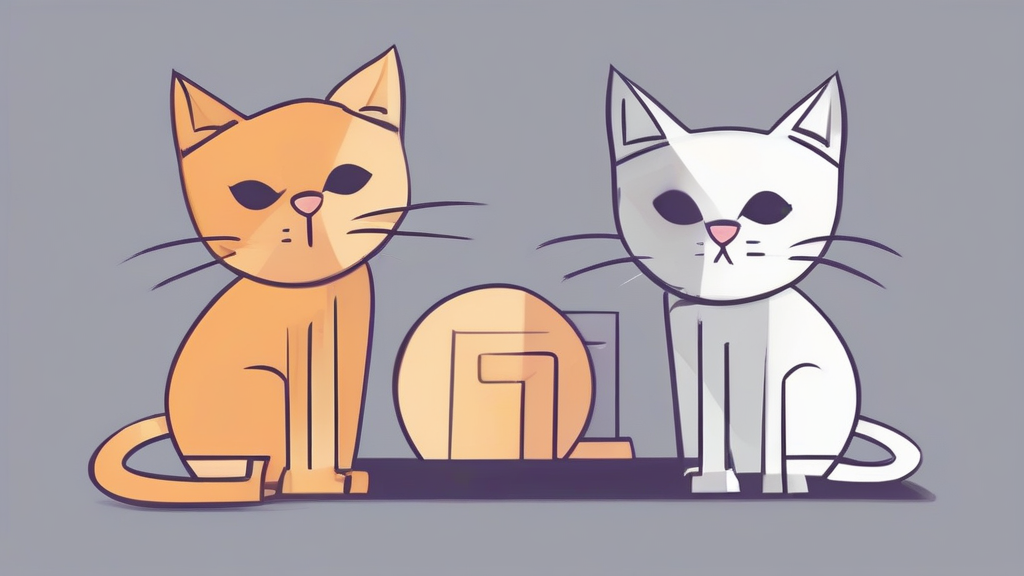
Can Older Cats Learn the Feline Focus Method? A Case Study
Many pet owners assume that The Feline Focus Method: How to Train Your Kitten Using Visual Anchors is strictly for the young. I used to think the same thing. After all, isn't there an old saying about teaching old dogs new tricks? Well, cats are not dogs, and their cognitive flexibility is often underestimated.
My own senior cat, Barnaby, a fourteen-year-old rescue with a penchant for napping and a general disdain for anything resembling "work," became my subject for this experiment. I wanted to see if the visual cues usually reserved for energetic kittens could actually penetrate the stubborn habits of a feline nearing his golden years.
- Senior cats possess the same fundamental learning mechanisms as kittens, though they may require more patience and higher-value motivation.
- Visual anchors function by creating a consistent, static point of reference that reduces anxiety and clarifies expectations for the cat.
- The Feline Focus Method relies on associative learning, a process where the cat links a specific visual signal to a desired outcome.
Understanding the Cognitive Capacity of Senior Cats
When we discuss training an older animal, we often overlook the underlying neuroplasticity that remains present throughout a cat's life. While aging does bring physical limitations, the brain's ability to form new neural connections does not simply shut off at age ten. The challenge isn't necessarily a lack of capacity; it is usually a lack of motivation or sensory clarity.
Why Visual Anchors Work
Visual anchors act as a "North Star" for your cat. By utilizing a specific target—a brightly colored stick or a unique pattern—you provide a non-verbal instruction that is easier for a senior cat to process than complex vocal commands. Older cats often experience a slight decline in hearing or a decrease in cognitive science-related processing speed, making visual stimuli the most efficient route for communication.
Barnaby, for instance, stopped responding to his name years ago. However, when I introduced a high-contrast yellow disc as his anchor, his eyes tracked it immediately. It wasn't about the sound; it was about the clarity of the visual signal.
Applying The Feline Focus Method: How to Train Your Kitten Using Visual Anchors to Seniors
Adapting this method for an older cat requires a shift in pace. Kittens are naturally curious and high-energy, which makes them prone to rapid trial-and-error. Seniors, conversely, are calculated. They weigh the cost-benefit analysis of every movement. If the reward isn't worth the effort of getting off the rug, they simply won't participate.
The Step-by-Step Adaptation
- Select a low-effort reward: Forget the dry kibble. Use high-value, soft treats that require minimal chewing.
- Keep sessions under three minutes: Fatigue is a real factor for senior joints. You want them to finish the session wanting more, not exhausted.
- Establish a consistent environment: Avoid new rooms or loud noises. A familiar, quiet space allows the cat to focus entirely on the anchor.
I started by simply letting Barnaby sniff the anchor. Once he realized the anchor was associated with a treat, the "click" happened. He wasn't learning a new trick; he was re-learning how to engage with his environment on his own terms.
Overcoming Resistance and Managing Expectations
You will face days where your cat simply stares at you with a look of profound indifference. This is not a failure of the method; it is a feature of the cat. When Barnaby refused to follow the visual anchor, I had to adjust my own expectations. I stopped viewing the sessions as "training" and started viewing them as "interactive play."
Pro-Tip: Never force a senior cat to participate. If they turn their back, end the session immediately. The goal is to build a positive association with the anchor, not to create a negative experience that makes them avoid you.
The beauty of the Feline Focus Method is its simplicity. Because it relies on visual anchors, it bypasses the need for the cat to be in a playful, high-energy mood. It functions more like a game of "follow the leader." Once the cat understands that the anchor leads to a reward, the "training" becomes a voluntary activity that they look forward to.
Tracking Progress: The Data Behind the Behavior
Over the course of six weeks, I tracked Barnaby’s response times. Initially, he would only follow the anchor if I held it within six inches of his nose. By the fourth week, he was following it across the living room rug. This progression proved that even at his advanced age, he was capable of learning new spatial associations.
It is worth noting that the speed of learning in older cats is significantly slower than in kittens. Where a kitten might pick up a target-touch command in two days, a senior might take two weeks. Patience is the hidden ingredient in this methodology. If you rush the process, you risk losing the cat's trust, which is far harder to regain than it is to build in a younger animal.
Why This Matters for Your Relationship
Training an older cat isn't about teaching them to jump through hoops or perform circus acts. It is about maintaining a bridge of communication. As cats age, they can become withdrawn. By engaging them with the Feline Focus Method, you are providing mental stimulation that keeps their mind sharp and reinforces your bond.
I noticed that Barnaby became more alert in the evenings. He started waiting by the drawer where I kept the treats and the anchor. He wasn't just being greedy; he was anticipating the interaction. That level of engagement is a win in any pet owner's book, regardless of the cat's age.
If you are considering trying this, start small. Don't look for immediate results. Look for small, incremental changes in their behavior. Does their tail flick when they see the anchor? Do they move their head to track it? These are the building blocks of success. You are not just training a cat; you are enriching the final chapters of their life with meaningful, focused activity.
Frequently Asked Questions (FAQ)
Can any senior cat learn using visual anchors?
Most senior cats can learn, provided they do not have severe cognitive dysfunction or physical pain that prevents movement. Always consult your vet if you are concerned about your cat's mobility or health before starting any new training routine.
How long does it take to see results with an older cat?
While kittens may learn in days, older cats typically require two to four weeks of consistent, short sessions to demonstrate a reliable response to visual anchors. Persistence is key.
What if my cat is food-motivated but has dietary restrictions?
You can use a small portion of their regular meal as the reward, or find a non-food reward that they love, such as a specific grooming brush or a gentle chin scratch, provided it is high-value enough to motivate them.
Post a Comment for "Can Older Cats Learn the Feline Focus Method? A Case Study"